
Part 1 Questions 1–10
Questions 1–6
Complete the form below.
Write ONE WORD AND/OR A NUMBER for each answer.
Riverside Arts Centre – Evening Course Enrolment Form
| Course | Pottery for beginners |
|---|---|
| First name | Daniel |
| Surname | 1 |
| Day of class | Tuesday |
| Class begins at | 2 pm |
| Fee for the term | £3 (materials included) |
| Student should bring | an old 4 |
| Mobile number | 5 |
| Date of first class | 6 |
Questions 7–10
Complete the notes below.
Write ONE WORD ONLY for each answer.
Pottery course – information for new students
Arriving
- in the evening, go in by the side door opposite the 7
- no charge after 6 pm in the car park at the 8
The classes
- tutor’s name: Marianne
- week 1: students make a 9 without using the wheel
- anyone who is absent one week can use the studio on 10 (10 am – 1 pm)
Part 2 Questions 11–20
Questions 11–15
Label the plan below.
Write the correct letter, A–H, next to Questions 11–15.
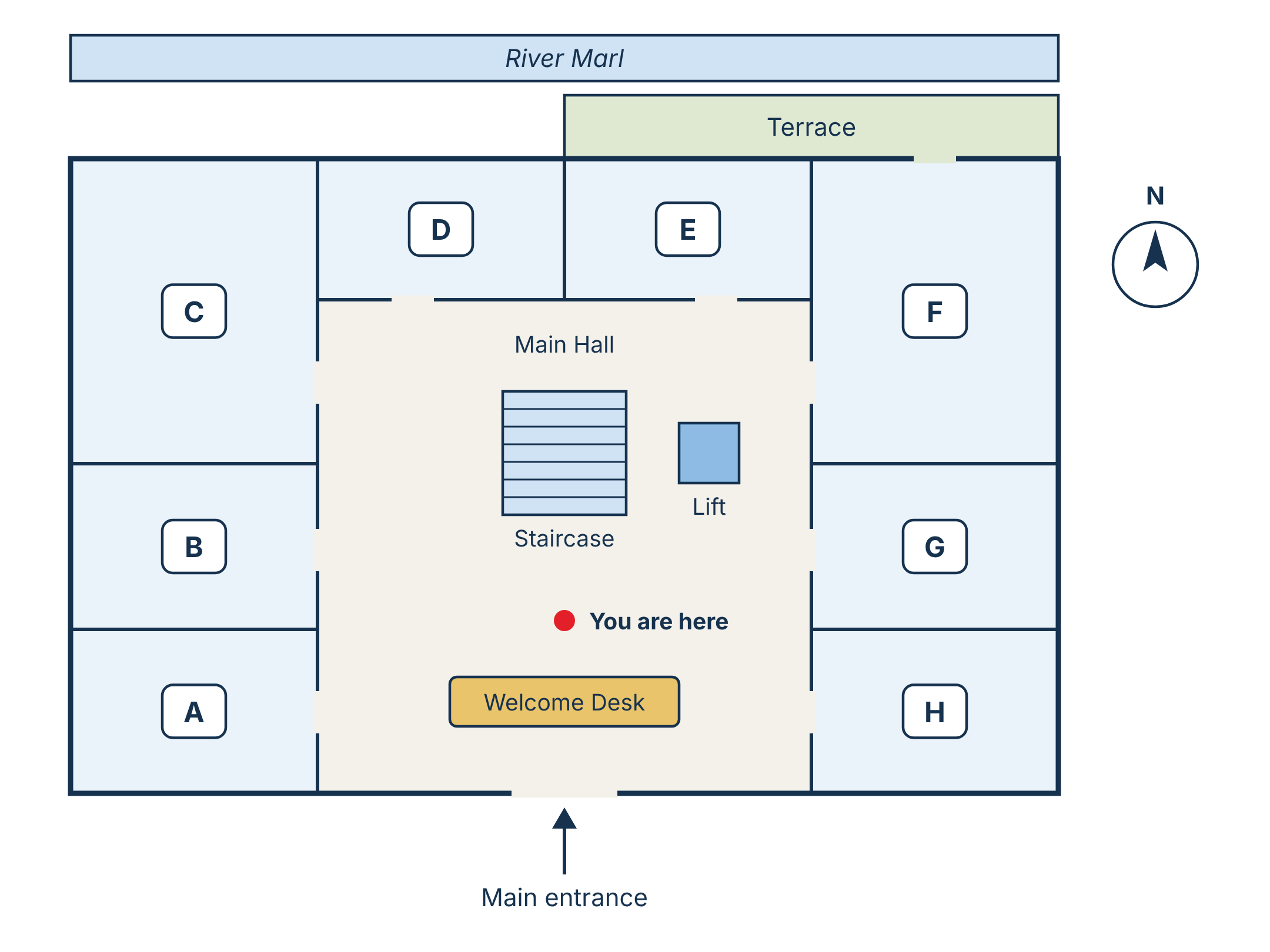
- 11 Cloakroom
- 12 Museum shop
- 13 Discovery Room
- 14 Café
- 15 Special exhibition
Questions 16–20
Choose the correct letter, A, B or C.
16 The museum stayed closed for longer than planned because
- the money for the project arrived late.
- the builders worked more slowly than expected.
- something of historical interest was found on the site.
17 What must people do if they want to see the special exhibition?
- reserve a time for their visit
- pay a small entrance charge
- join one of the guided tours
18 What does the guide say about the audio guide?
- It can be collected from the Welcome Desk.
- Visitors need their own device to listen to it.
- It has been recorded in several languages.
19 Which exhibit does the guide himself think visitors should not miss?
- a workshop that has been rebuilt inside the museum
- a floor decoration from Roman times
- an engine that is still in working order
20 Before they leave, the guide would most like visitors to
- become members of the museum.
- give some money towards its work.
- record their opinions of their visit.
Part 3 Questions 21–30
Questions 21–25
Choose the correct letter, A, B or C.
21 Maya suggested Bridge Street for the project because
- the students can travel there without difficulty.
- an earlier group of students had gathered data there.
- local people are currently being asked for their views on its future.
22 What surprised Tom in the study of European high streets?
- the mistaken ideas that shop owners had about how people reached them
- the amount by which shops’ income rose after traffic was removed
- the length of time that passed before any benefits could be seen
23 What is Maya’s main concern about the project at present?
- Members of the public may refuse to answer questions.
- The students are attempting to cover too many topics.
- The time available may be too short to finish it.
24 The students agree that their project will focus on
- how local shops and cafés would be affected.
- how far pollution in the street would fall.
- how people with limited mobility would manage.
25 Tom is in favour of sending their findings to the council because he thinks
- the council may take notice of what they say.
- it will make them do their research more thoroughly.
- it can be done without much additional effort.
Questions 26–30
What do the students decide about each of the following stages of their project?
Choose FIVE answers from the box and write the correct letter, A–G, next to Questions 26–30.
Decisions
- They will do less of it than they intended.
- They will rely on figures gathered by someone else.
- They will divide the work between them.
- They will ask other students to help with it.
- They will wait for permission before starting it.
- They will remove it from the project.
- They will do it sooner than they had planned.
Stages of the project
- 26 counting traffic
- 27 interviewing shopkeepers
- 28 carrying out the street questionnaire
- 29 visiting Ashby
- 30 writing the final report
Part 4 Questions 31–40
Questions 31–40
Complete the notes below.
Write ONE WORD ONLY for each answer.
Salt: the history of a commodity
Why salt became valuable
- hunters: obtained all the salt they required from 31
- farmers: a grain-based diet meant extra salt was needed for people and animals
- salt also kept food from spoiling
The ancient world
- Romania: salt made from spring water about 8,000 years ago
- Hallstatt (Austria): finds in the mines include tools, 32 and a staircase
- Rome: ‘salary’ is derived from a Latin word, but the claim that 33 were paid in salt is unproven
- China, 117 BC: the state took over the supply of salt and of 34
- Sichuan: salt water from deep wells travelled along 35 pipes
Trade in the Middle Ages
- Sahara: salt was taken south by camel and exchanged for gold
- Taghaza: salt blocks were the building material for 36
- Northern Europe: salt from Lüneburg was needed to preserve 37
Salt taxes
- France: big regional differences in price led to widespread 38
- India, 1930: Gandhi protested by leading a 24-day march to the 39
Salt today
- little of the world’s salt is used in food; most goes to the chemical industry
- large quantities are put on 40 in cold weather